Forms of Cerebral Palsy: Hemiplegia
Hemiplegia

Hemiplegia is a type of cerebral palsy that affects one arm and leg on the same side of the body.  For most children with hemiplegia, the arm is more disabled than the leg, and the end of the limbs are the most affected.  The wrist and hand have the most disability, but there will be less trouble for the elbow and still less for the shoulder.  Similarly, the ankle and foot will exhibit more difficulties than the knee.

The most common type of motor dysfunction in hemiplegia is spasticity, complicated by the resulting decreased growth of the affected muscles.  (See the section on Spasticity.)  As with other forms of cerebral palsy, hemiplegia results in shortened muscles.  Patients experience progressively less range of movement and increased stiffness in the joints of the limbs involved.

 Because of the natural variation in development, mild abnormalities are often unnoticed by both parents and pediatricians.  One symptom that can be an initial clue is early hand preference.  In infants without some form of motor impairment, hand preference, left or right, is usually not established until 18-24 months of age.  If the young infant consistently favors one hand over the other even if the toy or object is presented to the other hand, it may be due to hemiplegia.  The affected hand may often be held in a fist, and the leg on the involved side of the body may seem weaker than the other.

At the normal age range for sitting, children with cerebral palsy will sit up but may often fall to the side.  As they grow stronger, children with classic hemiplegia will be able to hold themselves up and become capable sitters.

After a child is diagnosed with hemiplegia, a full neurological evaluation is necessary to learn if other conditions are present.  The doctor will make sure no other condition, such as a brain tumor, is causing the child’s symptoms.  Parents can then begin a process, which continues throughout the coming years, of consulting with health care professionals (physicians, occupational and physical therapists) and teachers to develop a plan that is consistent with the individual child’s abilities.

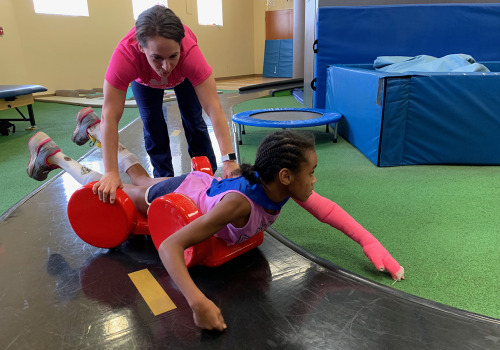
As the child grows, evaluations will take place to see if any special braces or splints would aid the affected limb, thereby giving the child better use of both hands. During play in the first years, the child should be given toys and other playthings that promote the use of two-handed manipulation and that encourage both hands to work together.  It is important to avoid frustration.  Do not force the child to try an activity that is beyond the child’s ability.

Children with hemiplegia may start walking late and may first start walking on tiptoe.  They may grow out of tiptoe-walking on their own.  If not, there are special braces and devices that can help to normalize the foot position.  Except in the most severe types of hemiplegic cerebral palsy, it is unusual for the child to be unable to walk.

Please feel free to

.
Forms of Cerebral Palsy: atheloid, ataxic, mixed, and spastic.