|
Treatment of Cerebral Palsy: Physical Therapy
|
|
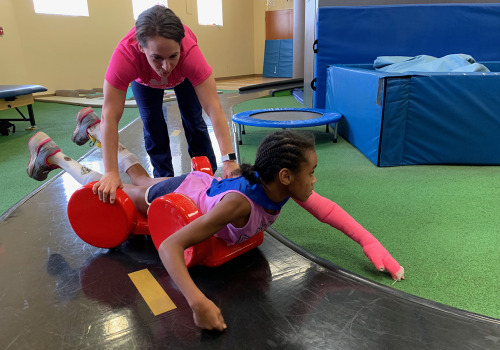
The job of the physical therapist is to help a child's mobility to develop and to teach and practice exercises designed to avoid contractures, bone deformity and unwanted movement. In general, they are trained to work with your child to enable her to reach maximum physical function. Therapy, whether for movement, speech, or practical tasks, is a cornerstone of cerebral palsy treatment. The skills a 2-year-old needs to explore the world are very different from those that a child needs in the classroom, or a young adult needs to become independent. Cerebral palsy therapy should be changed as the child ages to fit his needs at different stages in life. Physical therapy is usually just one part of an infant development program, which should also include efforts to provide various stimulating environments. Like all children, the child with cerebral palsy needs new experiences and interactions with the world around him in order to learn. Stimulation programs can bring this valuable experience to a child who is physically unable to explore. A physical therapy program may consist of one or more of the following:
Physical therapistsusually focus on activities involving the legs, such as walking, braces, using crutches and rehabilitation after a surgery. A patient's physical therapy treatment program will likely change quite a bit over the years, since your child will probably not have the same physical limitations in adolescence that he had as a baby, although they are all a result of CP. Physical therapy can also help a child's family by reducing stress caused by caring for the child. Much of what the physical therapist will do in their treatment program will be teaching and practicing exercises that the parents can do with their child at home, making it a less intimidating task to help with the child's treatment and proper growth. Many parents attend their child's physical therapy sessions with them, which is helpful in physical therapy for a number of reasons. Many children perform better in comfortable settings. For instance, children can often complete exercises and tasks much more easily at home than in a doctor's office. For this reason, having her parent(s) present can give the child much-needed positive reinforcement and a feeling of security. If parents are not involved in their child's physical therapy treatment sessions, the child may not do as well in his treatment program. Physical therapy is used to prevent contracture complications by stretching the affected muscles, and can also be used to improve motor development (development of voluntary muscle movement and control of muscle movement). Specific physical exercises help to keep the muscles from becoming weakened and from deteriorating due to lack of use. Patients can experience muscle contractures when muscles become fixed in a rigid and akward position. Treatment may include behavior therapy involving, psychological techniques to complement physical, speech or occupational therapy and can also help to improve quality of life. Although physical and occupational therapy are different in many ways, when treating a child with cerebral palsy, they can overlap quite a bit. They are both responsible for motor skill development, but the occupational therapist is focused on fine motor skills involving the hands, face and feet, while the physical therapistfocues on developing gross motor skills, involving movement on a larger scale. Some examples of the overlap between physical therapy and occupational therapy are:
In addition to the overlapping areas of specialization listed above, a physical therapist will also be responsible for:
Another goal of some physical therapy programs is to improve the child's motor development. A common program of physical therapy that works toward the goal pf improving motor skills is called the Bobath technique, named after a husband and wife team who founded this approach in England. This program is based on the idea that the primitive reflexes (such as clenching your teeth or tensing certain muscles) that many children with cerebral palsy may (unconsciously) hold on to cause major "bumps in the road" in learning voluntary control of their muscles. A therapist using the Bobath technique tries to work against these reflexes by positioning the child in an opposing position. For example, if a child with cerebral palsy normally keeps his arm flexed, the therapist would repeatedly extend it to try to help him "un-learn" this reflex. Another approach to physical therapy is "patterning," which is based on the principle that motor skills should be taught in more or less the same sequence that they would develop normally. In this controversial approach, the therapist guides the child with movement problems along the path of normal motor development. For example, the child is first taught basic movements like pulling himself to a standing position and crawling before he is taught to walk -- regardless of his age. Some experts and organizations, including the American Academy of Pediatrics, have expressed strong doubts and worries about the patterning approach, because studies have not documented its value. The Bobath Approach to Treatment The Bobath treatment aims to improve posture and movement to help a person with cerebral palsy perform daily tasks more easily. Through specialized ways of handling, a physical therapist can:
Depending on the severity of his cerebral palsy, the child may be better able to learn how to sit up, use his hands, to stand up, to stand, and to walk. Ideally the treatment will be a central part of the daily routine for your child. For example, the way the child is picked up, carried, put down, or positioned when sitting will enable parents/carers to enhance the child's ability to function. The aims of the treatment are goal-orientated and influenced by several factors such as the age of the child, severity of their condition and their motivation. Treatment is planned for each child based on an evaluation. Some of the areas that will be looked at are:
Once the child has been evaluated, a 'problem-solving' list will be prepared in order of importance for the child's proper treatment, and then the appropriate techniques can be used to deal with the child's weaknesses and build on his strengths. Positioning is very important in Bobath treatment, because correct positioning helps improve movements. Experience of different positions is necessary to improve overall body control and reduce the chances of bad posture that might not have been a problem with proper treatment. Handling a child using key points on the body allows the therapist to manipulate the child to correct their movements. Help may be given with movements like chewing, handling objects, moving about, sitting or lying down. Even when a child is being carried, using correct positioning and handling of 'key points' on the child's body, is considered very important, because it lets the child experience normal movement patterns as much as possible. How Parents, Families and Carers are involved Like any other therapy, Bobath requires effort and practice in order to achieve benefits, so the opinions and participation of parents and carers are very important, as they spend the most time handling the child. The therapist will work with the family and/or carers to teach them how to handle and position the child properly at home, so they can be encouraging and assisting their child's correct movement. Brothers and sisters are also encouraged to join in. In fact, anyone involved with the child can participate in the therapy. Good communication by everyone involved with the child is very important because it helps to make sure that the child is having appropriate goals identified, and that every one is happy with the child's progress.Many children do not like therapy, so incorporating the movements into day-to-day life and fun activities improves the outcomes, and is more acceptable and practical to the whole family. As the child with cerebral palsy approaches school age, the focus of therapy shifts away from early motor development and starts to focus on:
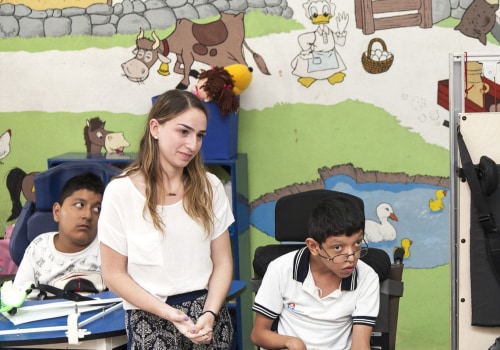
If your child is old enough to go to school, physical therapy can help her prepare for the classroom by improving her ability to sit, move independently or in a wheelchair, or perform tasks that require fine motor skills, such as writing. In occupational therapy, the therapist works with the child to develop such skills as feeding, dressing, or using the bathroom. This can help reduce demands on caregivers and boost the child's self-reliance and self-esteem. For the many children who have difficulty communicating, speech therapy works to identify specific problems and overcome them through a program of exercises. For example, if a child has difficulty saying words that begin with "b," the therapist may suggest that the child practices every day saying a list of "b" words, making each list harder and harder when the child is comfortable with each list. Speech therapy can also work to help the child learn to use special communication devices, such as a computer with voice synthesizers that can talk for your child. The need for and types of therapy and other support services that your child uses will continue to change as the child ages and his needs and abilties keep changing. Continuing physical therapy addresses movement problems and is supplemented by vocational training, recreation and leisure programs, and special education when necessary. Counseling for emotional and psychological challenges may be needed at any age, but is often most important during the teenage years and throughout puberty. Depending on their physical and intellectual abilities, adults may need attendant care, living accommodations, transportation, or employment opportunities. Regardless of the patient's age and which types of therapy are used, treatment does not end when the patient leaves the office or treatment center. In fact, most of the work is often done at home. The therapist functions as a coach, providing parents and patients with the strategy and drills that can help improve performance at home, at school, and in the world. As research continues, doctors and parents can expect new types of therapy and better information about which kinds of therapy are best for individuals with cerebral palsy. Children's social and intellectual abilities are as significant as their movement skills, so when you schedule your child's therapy sessions, make sure the therapist considers your child's need to develop social skills so that he can function better in a community setting. Classroom activities may take precedence over therapy. While walking may be an appropriate goal for some children, independent powered-wheelchair mobility may overall be more helpful to your child, especially if limited walking takes a lot out of her. Long-term consequences of walking with crutches (or walkers) may also need consideration. Looking to adulthood, opportunities for independent living and employment also need to be considered as new intervention strategies become known. Children approaching adolescence need enjoyable activities to keep them fit and motivated. At this stage, the physical therapy focus changes to focus on physical fitness with activities such as:
Treatment for adolescents should center on personal independence, and so teenagers should be key players in developing their own goals. If self-care is not possible, learning to direct personal care attendants allows some independence. Mobility and communication skills continue to be a very important focus. When a teenager moves to a larger high school setting which usually requires moving from classroom to classroom, walking may be inefficient and exhausting. Accordingly, a physical therapist can help an adolescent choose the best means of mobility. For the adolescent who is not limited by significant impairment of intelligence or memory, independent community mobility is an appropriate goal. This can be accomplished by learning to drive or using public transportation. During puberty, physical therapists may address issues regarding bodily changes, sexuality and weight gain. In the past, children who needed it received therapy regularly, from birth to adulthood. Currently, few insurance companies cover therapy to that extent. Instead, brief, intense periods of therapy are considered desirable, especially at times of transition and growth. For example, when a child is considered ready to learn a new skill, such as getting on and off the toilet, he is likely to benefit from therapy two or three times each week until this skill is mastered. Physical therapists can also work with parents to come up with home exercise programs. In this way, therapy can (and should) be ongoing. Today, therapists follow a family-centered approach focusing on lifetime needs, especially for communication, mobility and self-care. Improvement at the level of impairment may reduce deformity and pain. Successfully reducing limitations and disabilities greatly improves quality of life. Home | Cerebral Palsy Causes | Cerebral Palsy Forms | Cerebral Palsy Conditions Home | Counseling | Music Therapy | Occupational Therapy | Physical Therapy |
|
Please feel free to |
|
|
|
|
|
Physical Therapy, Pharmeceuticals, Play Therapy, Speech Therapy and Surgery. |